Holiday Hours: We will be closed Monday, September 7th
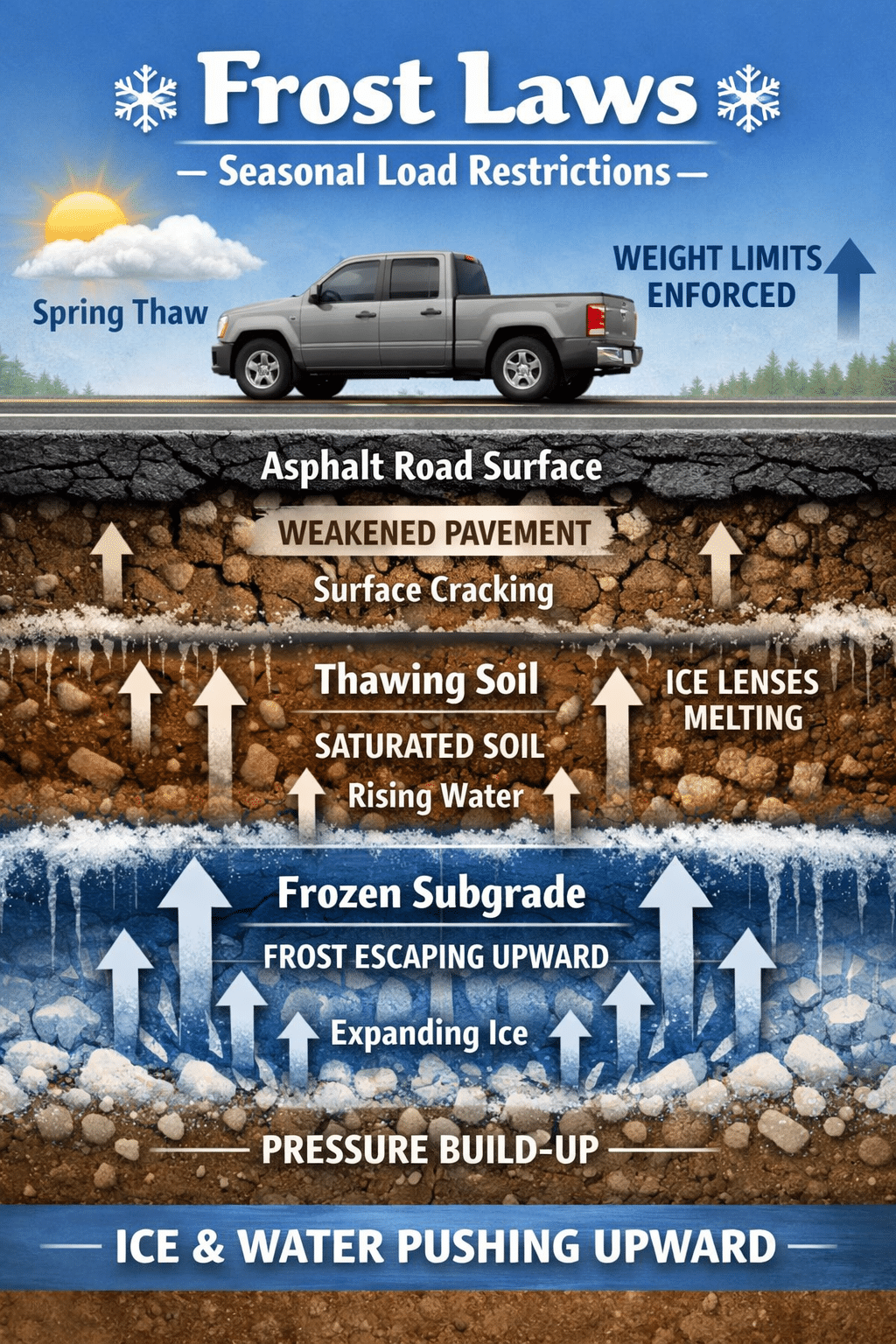
Every year toward the end of winter or early spring, you may hear the term “frost laws.” These are more commonly known as seasonal load restrictions, and they’re put in place by local and state agencies.
But what does that actually mean for you?
Why Frost Laws Exist
As temperatures begin to warm up, the frost starts coming out of the ground. During this thawing period, the soil underneath the roads becomes softer and weaker. Heavy truck traffic can cause serious damage to road surfaces during this time.
To protect the roads, government agencies temporarily limit how much weight can be hauled on certain roads (frost laws) during this vulnerable time of year.
Two Types of Roads During Frost Laws
When seasonal load restrictions are in effect, roads fall into two categories:
Generally, Class A roads, Interstate Highways, and State Highways are not restricted. Most other local roads may have temporary weight limits.
How Frost Laws Affect Deliveries
During frost law season, we are generally limited to hauling the following quantities on restricted roads:
These reduced loads help protect road conditions while still allowing customers to receive materials.
If your property is located on or accessed by a restricted road, delivery quantities may need to be adjusted until restrictions are lifted.
Have Questions?
If you’re unsure how they might impact your delivery, the team at Hammond Farms is here to help you figure it out. Just give us a call or ask before scheduling your load.
Give us a call at 517-999-0788